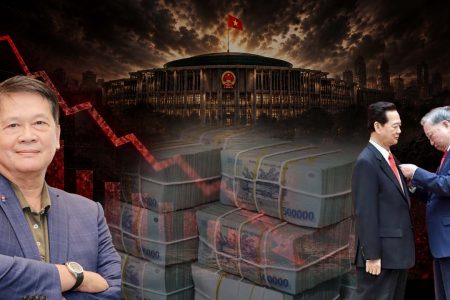
On March 5, 2026, state media reported that VIW shares of Viwaseen Corporation immediately surged to the daily limit of 15% right after Mr. To Dung was elected Chairman of the Board of Directors.
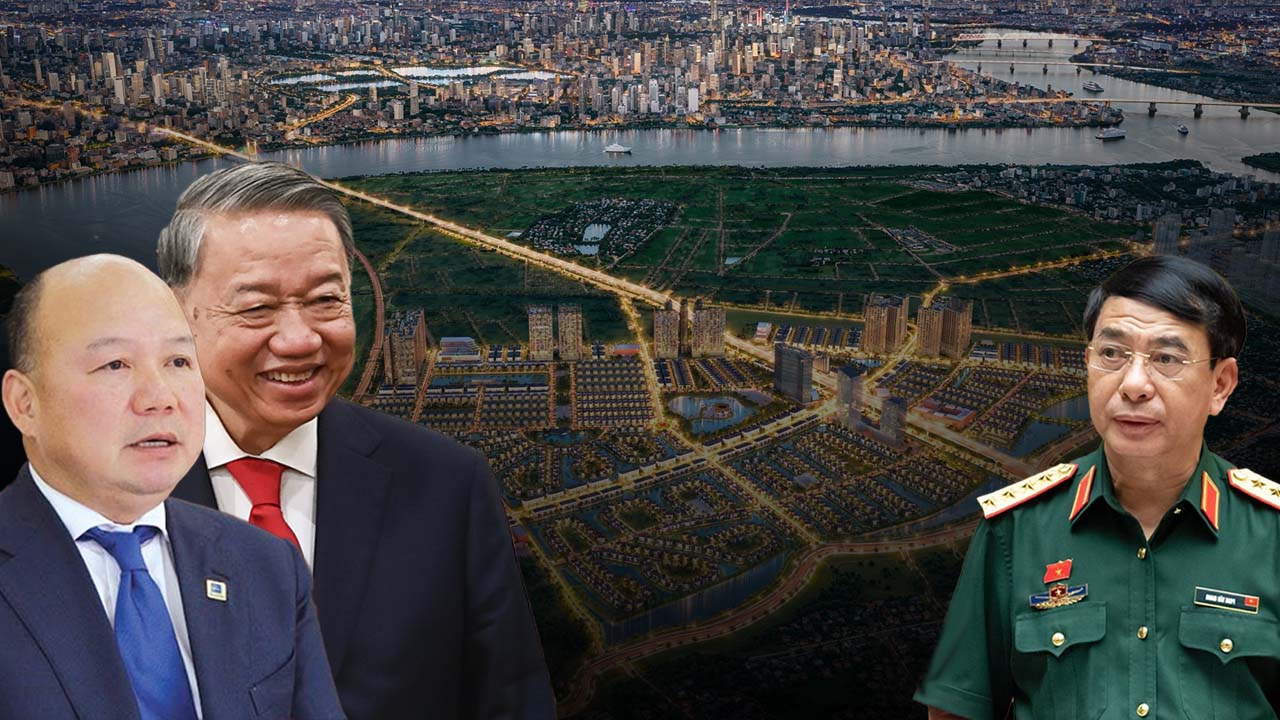
According to political observers, this is a clear indication of the resonance between General Secretary To Lam’s absolute political power and the business advantages enjoyed by family-linked patronage groups.
Mr. To Dung, the head of the Xuan Cau Holdings ecosystem and the elder brother of the General Secretary, has long been regarded by insiders as a central figure in the economic network connected to the To family.
Against the backdrop of To Lam’s overwhelming victory after the 14th Party Congress, which consolidated his position as General Secretary, To Dung’s open takeover of major equitized enterprises raises serious questions about transparency and integrity in the national governance of the country’s top leader.
Before the 14th Party Congress, reports that Xuan Cau Holdings had used its influence to acquire large-scale real estate and renewable energy projects were nothing new.
However, the complexity of these relationships also involved clashes of interest with the military faction.
Earlier data pointed to Xuan Cau’s joint venture with CityLand, a company believed to be a “backyard” business of the military faction, to appropriate dozens of hectares of prime land in the Me Tri Radio Station area in central Hanoi.
This revealed a tangled picture of covert deals among Vietnam’s power groups. Notably, the power struggle between the Public Security and Military factions has also surfaced in recent Investigation Conclusions issued by the Ministry of Public Security.
In the case involving former Minister Nguyen Thi Kim Tien and the Bach Mai Hospital and Viet Duc Hospital campus 2 projects, the Ministry of Public Security’s investigation agency explicitly named four major corporations under the Ministry of National Defense for allegedly paying 5% kickbacks on contract values.
This has been viewed as a strike at the economic lifeline of the military faction, giving the General Secretary an advantage ahead of crucial personnel decisions on the highly important “merger of the two top posts.”
However, while the wrongdoing of the military faction has been exposed loudly and publicly, the business activities of “backyard companies” such as Xuan Cau Holdings seem to be benefiting from the silence of the authorities.
The fact that Mr. To Dung has continuously expanded his influence into state-owned enterprises after equitization, such as Viwaseen, immediately after To Lam assumed supreme power, is a reality that is difficult to dispute.
More broadly, the legacy of the 14th Party Congress is proving a highly troubling trend: the more concentrated power becomes, the more the family interest groups of powerful leaders tend to expand aggressively.
This further shows that General Secretary To Lam’s message about “accurate and full accounting” and his firm commitment to fighting inflation and public debt will become contradictory if economic privileges continue to be reserved for conglomerates close to him.
If the “blank zones” in the management of prime land and major construction bidding packages are not clarified, then the anti-corruption campaign and efforts to reform the state apparatus will only be seen as tools for To Lam to eliminate rivals and clear the way for new loyalist tycoons to emerge.
The prosperity of Xuan Cau Holdings, or the meteoric growth of Viwaseen under the shadow of supreme power, is the greatest test of the promise of a rule-of-law system that To Lam claims to be pursuing.
The people need to see fairness — a system in which the law does not stop at the doorsteps of the highest-ranking officials, and where the nation’s prosperity is not traded away for the enrichment of patronage interest groups.
Tra My