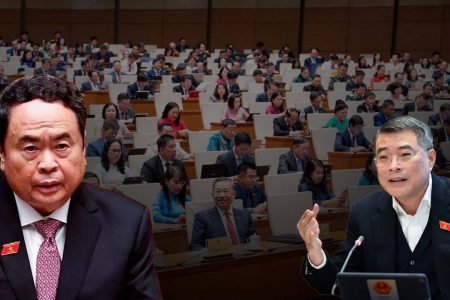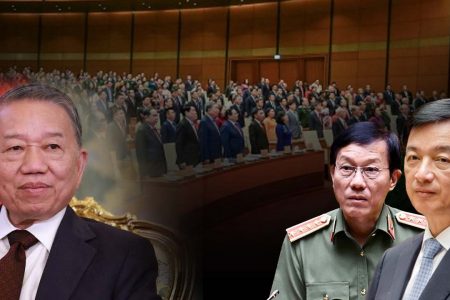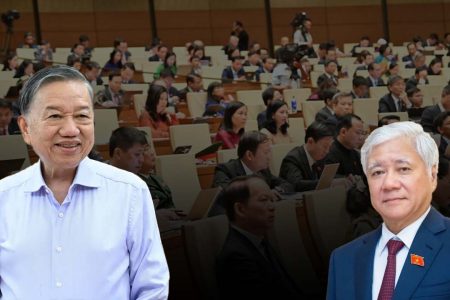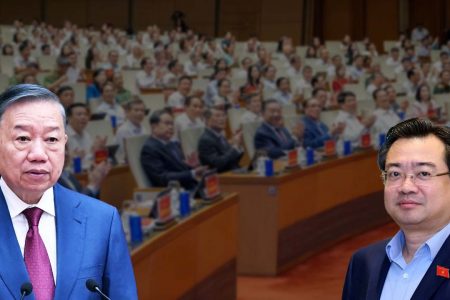
On the afternoon of January 23, 2026, the 14th National Congress of the Communist Party of Vietnam (CPV) will conclude a day and a half earlier than originally scheduled, instead of ending on January 25, 2026.
State media has praised the shortened timeline as a sign of “lightning-fast, innovative, and efficient” work spirit. Yet, in the eyes of international political observers, this move carries a far deeper—and far harsher—meaning.
Bringing one of the country’s most important political events to a swift close—an event that determines Vietnam’s trajectory for the next five years—is a signal that the power game in Ba Đình has already been fully settled.
And the high-level personnel script directed and arranged by General Secretary Tô Lâm appears to have left no room for any resistance or unexpected variables, despite widespread speculation.
According to observers, the discussion period at a Party Congress normally provides the necessary space for factions to engage in last-minute lobbying or to resolve disagreements that have not yet been reconciled.
However, the fact that the 14th Congress has “skipped stages”—ending as much as 36 hours early—is the clearest evidence that “absolute consensus,” whether voluntary or imposed, is something Tô Lâm has managed to secure.
Because if fierce disputes or a tug-of-war between the two blocs—the Ministry of Public Security and the military—over the “four pillars,” the Politburo list, and other key arrangements were still unresolved, Tô Lâm would not dare to take the risk of cutting the schedule short while still needing time to extinguish a crisis.
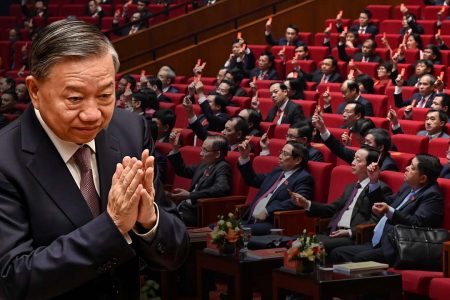
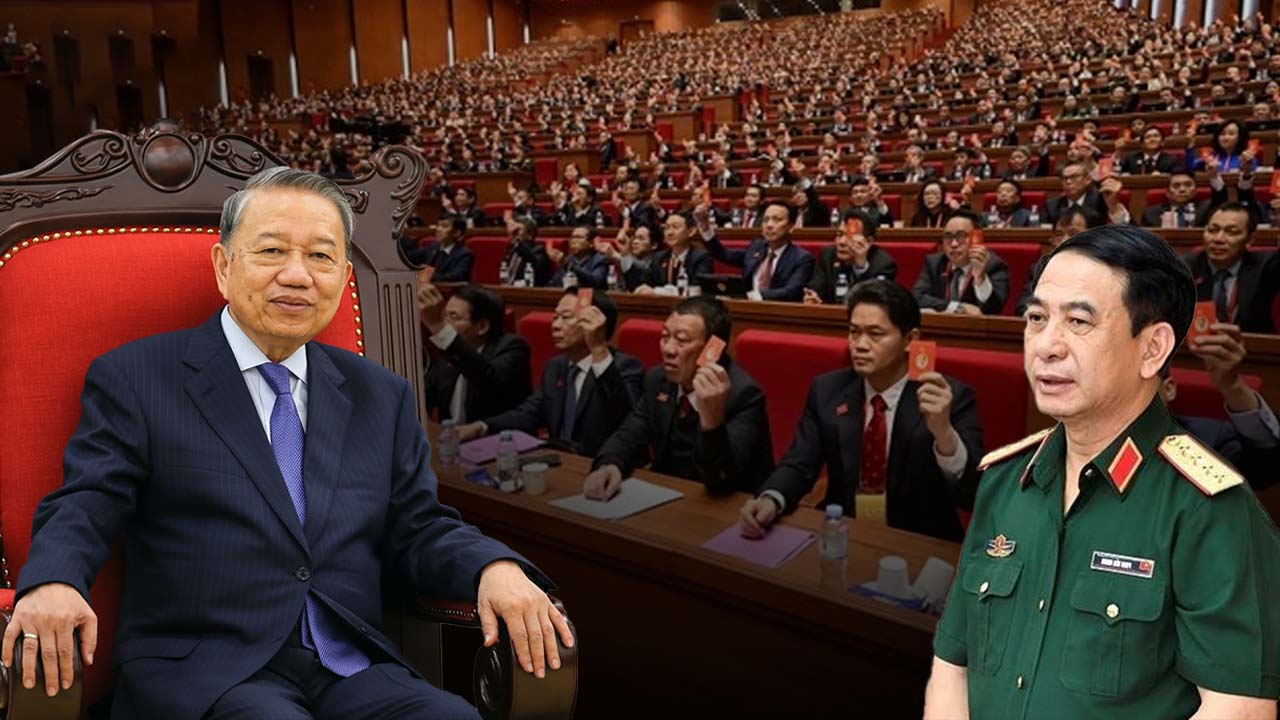
Therefore, the early closing of the 14th Congress confirms that the list of top-level appointments had been locked in beforehand, and the 1,600 delegates in attendance became those who merely formalized procedures for a new power order that had already been decided.
This is an extremely bold decision by General Secretary Tô Lâm—a leader who rose from the ranks of security and intelligence, seasoned in political control—choosing to shorten the timetable to minimize risk.
In politics, time is always the most unpredictable variable: “long nights breed many dreams,” and shortening the working time of the Congress reduces the danger of adverse, dissenting opinions emerging. For example, spontaneous “supplementary nominations” intended to sabotage proceedings could have worked against Tô Lâm.
By accelerating the process and ending early, Tô Lâm carried out a swift preemptive political strike aimed at eliminating any pockets of resistance from opposing forces still trying to reverse the situation. At the same time, he sent a message of decisive leadership, comprehensive control, and zero tolerance for divergence.
Notably, this speed comes in a context where Tô Lâm has not yet moved to amend the Party Charter to formally institutionalize a system in which the General Secretary concurrently serves as State President, following China’s model.
This is seen as a calculated compromise between the security bloc and the military. The General Secretary has accepted stepping back “one step to move forward two steps,” in order to avoid resistance from conservative elements and the military—while still maintaining absolute control over a predetermined personnel structure.
The early adjournment also suggests that the military faction—often regarded as the strongest counterweight—has seemingly accepted its position in the new power architecture and chosen what it sees as the safest option: silent compliance with the script to avoid disruption.
The 14th Congress thus ends in a silence marked by order and discipline, ushering in an unprecedented era of centralized power, one in which the will of General Secretary Tô Lâm dominates Vietnam’s political arena.
The early conclusion of the 14th Party Congress, in effect, signals that Tô Lâm has officially declared: the game is over, and power now sits firmly in the hands of the General Secretary and his public security faction.
Trà My – Thoibao.de