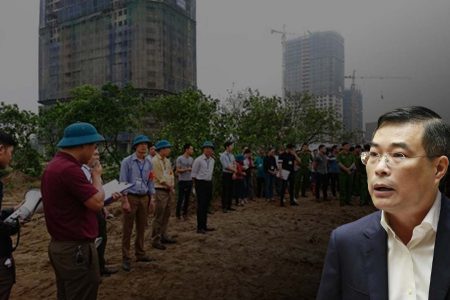
That the Government had to rush out Resolution No. 09-2024 on the afternoon of February 5, 2026—temporarily suspending the effectiveness of Decree 46 and Resolution 66.13 just ten days after they were issued—is an unprecedented event.
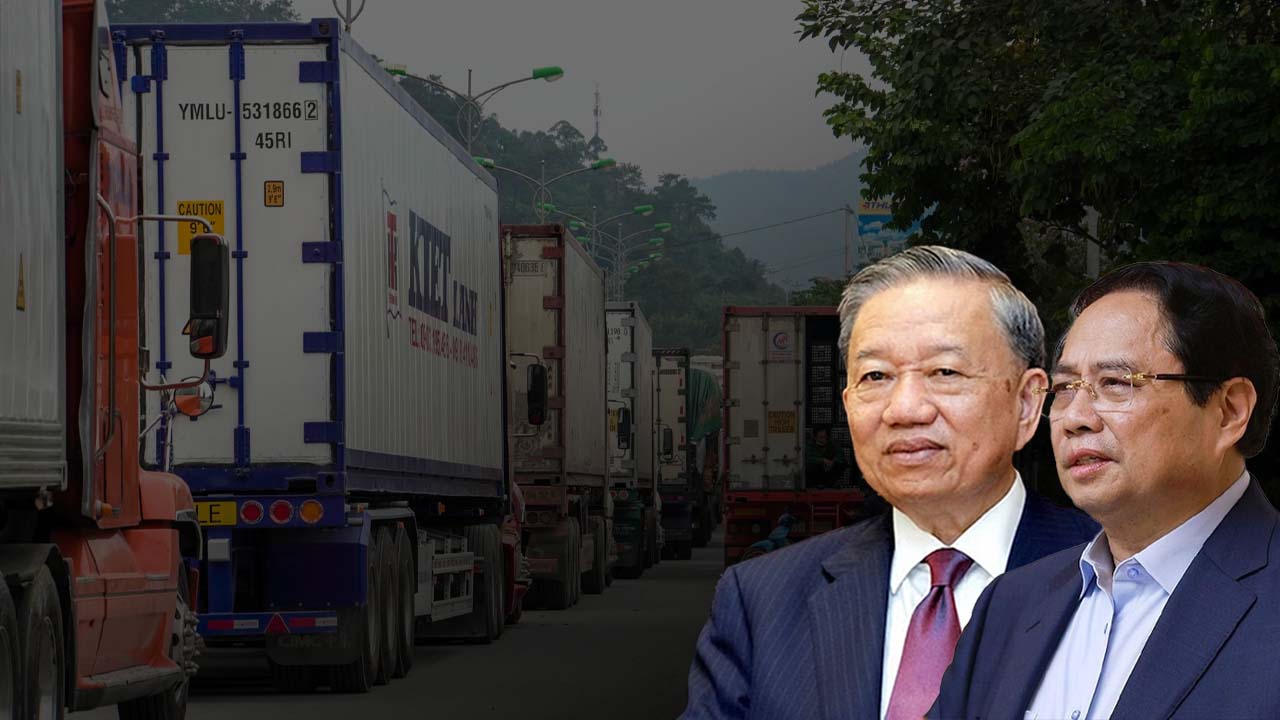
It was not only an emergency “slam on the brakes” to save thousands of tons of agricultural produce rotting at border gates nationwide; it was also a slap in the face to General Secretary Tô Lâm’s “haste makes waste” style of governance.
This is a costly demonstration of what happens when an overly “tight” control mechanism—so heavily emphasized in the “new era”—is pursued without responsibility and without practical feasibility: it becomes a knockout blow aimed straight at businesses.
The application of Decree 46—an “effective immediately” legal instrument—at the most critical moment of the Lunar New Year trading season revealed an astonishing indifference on the part of the Government apparatus to the pulse of the market.
Almost overnight, thousands of containers of goods meant for the biggest holiday season of the year were suddenly dealt a “fatal strike” at border checkpoints, because the new inspection procedures came with no implementation guidance.
Import–export enterprises, already battered after a volatile 2025, now had to swallow a harsh directive stemming from an administrative document—one “like no other”—issued by the Ministry of Health.
The “tightness” of this decree exposed a vast gap between the air-conditioned theories of officials drafting documents and the harsh reality at border gates.
Instead of immediately removing obstacles to triage the economy and clear shipments left exposed to sun and rain, for reasons unclear the Ministry of Health chose to hold… meetings to “disseminate and explain” the decree.
According to experts, the decree’s excessive strictness even disregarded international quality certifications that businesses had worked hard—and spent heavily—to obtain.
When a decree irrationally demands on-site inspection even for pre-packaged products manufactured in the United States or France before they may be cleared, it reveals a reckless, willful negligence that runs counter to international norms.
Notably, Resolution 09 was signed by Deputy Prime Minister Lê Thành Long—and Mr. Long is also the official who signed Decree 46—now effectively putting it on hold until April 15, 2026. This is an unmistakable admission of error.
Although Prime Minister Phạm Minh Chính issued urgent orders to resolve the bottleneck, the damage has already occurred and cannot be fully compensated. Who will take responsibility for goods that have spoiled or missed the New Year sales window? Who will compensate for the loss of trust among international partners?
The shortcomings of Decree 46 are not merely an administrative technical mistake; they are symptoms of a chronic disease in the new era: a preference for imposing control and a “haste makes waste” mindset.
Mr. Tô Lâm’s desire to engineer rapid change after the 14th Party Congress has led to unintended “ambushes,” leaving businesses unable to react in time.
A strong governance system is not one that issues the fastest or strictest rules, but one that creates workable roadmaps for the whole society.
And the painful lesson remains fresh: the Party leadership’s hasty attempt to merge provincial and municipal administrative boundaries ended in failure.
Vietnam’s economy, under the leadership of General Secretary Tô Lâm and Prime Minister Phạm Minh Chính immediately after the 14th Party Congress, has run headlong into a concrete wall erected by the administrative system itself.
The “tightening to the maximum” embodied in Decree 46 reflects a broader trend of tightening regardless of the state apparatus’s capacity—and it will only lead to breakdown, with ordinary people and law-abiding businesses always bearing the final consequences.
Tra My – Thoibao.de