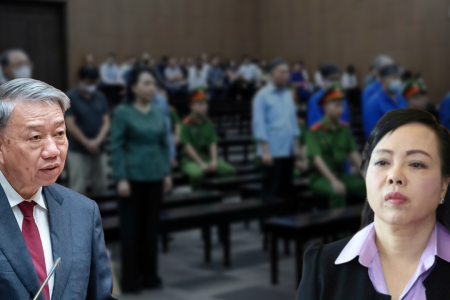
The upper echelons of politics in Ba Dinh have recently been overshadowed by a major and haunting question that has yet to receive a complete answer.
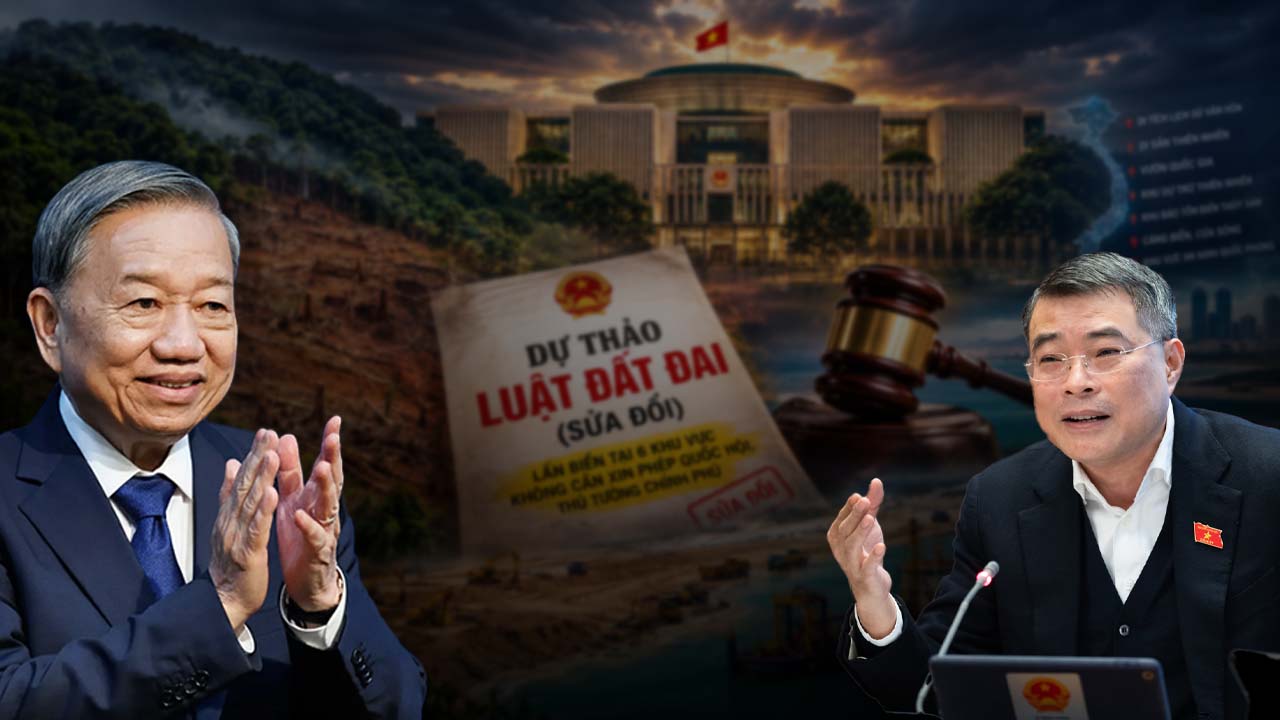
That is, who is actually backing the extremist groups that continuously launch “rebellious” smear campaigns from within to curb the power and reform agenda of General Secretary and President To Lam?
According to observers and the perspective of Professor Stephen B. Young, the unrelenting surge of these campaigns has defied the existence of Directive No. 07/CT-TW, even as the head of the Communist Party of Vietnam advocates for a spirit of liberal education and reform.
This demonstrates that these are by no means spontaneous, extreme manifestations of “dissatisfied elements” on the internet, as many people assume. Rather, behind these organized, systematic attacks lies a meticulously and detailed script.
Specifically, there are two very distinct spearheads: the propaganda apparatus that claims a monopoly on truth, and a number of former military leaders holding extreme conservative views. Examples include former military leaders such as Lieutenant General Hoang Kien and Brigadier General Nguyen Thanh Tuan.
When the propaganda apparatus of the “conservative” faction within the military grants itself the authority to judge legitimacy—combined with the wartime credibility of veteran groups and veteran revolutionaries—
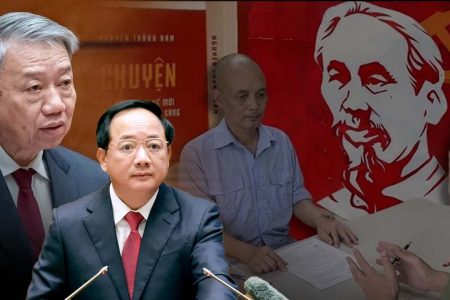
A literary work that was originally harmless—such as the book *Chuyện với Thanh* by author Nguyễn Thành Nam, a former leader of the renowned FPT Technology Group—was immediately turned into an ideological case and dealt with ruthlessly.
Consequently, the author’s motives were brutally criminalized, and his loyalty was thoroughly scrutinized—all in place of fair academic debate over a literary work—in an effort to determine which side Nam belonged to.
Still according to Prof. B. Young, this calculated and symbolic alliance of “hidden power” has granted the “conservative” faction immense power—enough to nullify even resolutions from the Politburo—and turned these public denunciations into a brutal test for the reformist faction.
More dangerously, to carry out this campaign, there was no need for direct directives from across the border. Instead, it relied on a deep ideological affinity and the self-preservation instinct of the “conservatives,” who feared losing their privileges if Vietnam successfully implemented reforms.
The propaganda apparatus of the General Political Department—Ministry of Defense—and the “Public Opinion Officers” groups are relying on defending the ideological monopoly that benefits them.
At the same time, they are using the “Chuyện với Thanh” cases as a sharp tool to eliminate top rivals within the reformist faction.
By stirring up an internal conflict within the Party, these “conservative” forces are working to preserve the status quo of the Communist Party of Vietnam’s sole leadership.
The fact that Mr. To Lam—a leader who has concentrated significant power in his hands but is powerless against these rebellious networks—demonstrates that Vietnam’s political system remains tightly bound within an externally imposed ideological framework.
To answer the question of who is backing the “rebellious” online opinion influencers, one must look directly at the instability within the Party to see that there are forces that always want to keep Vietnam perpetually in a position of weakness.
The ultimate consequence is that Vietnamese society is being torn apart by deep divisions, Mr. To Lam’s reform efforts are being stifled, and the country and its people are unable to rise up and usher in a new era.
The most dangerous—and also the hardest to identify—threat does not lie with the forces that openly reveal themselves; they appear to be acting on behalf of foreign powers.
Trà My – Thoibao.de