At a press conference on October 28, 2026, Health Minister Dao Hong Lan stated that the draft “Law Amending the Law on the Donation, Removal, and Transplantation of Human Tissues and Organs and the Donation and Removal of Cadavers” is being urgently finalized for submission to the National Assembly for consideration during the second session of the 15th National Assembly.
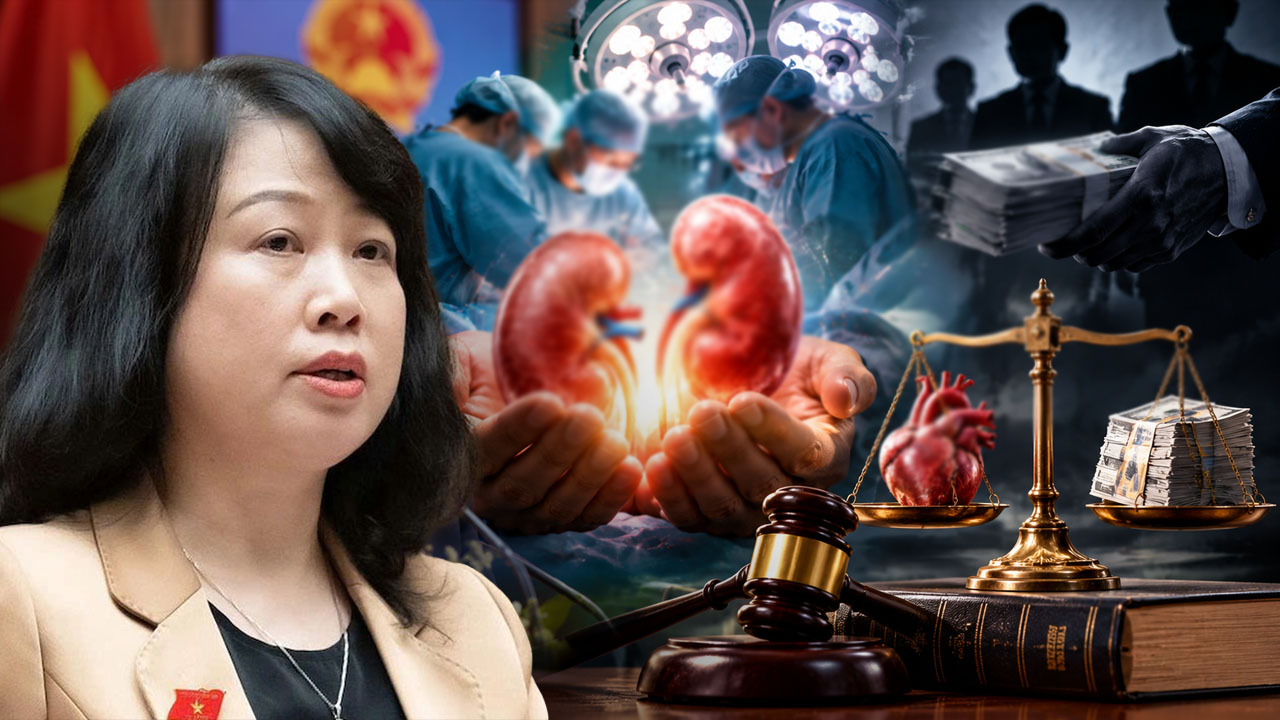
According to Ms. Dao Hong Lan, the Ministry of Health will sincerely take into account all feedback from lawmakers, the public, experts, and the media.
However, Ms. Lan’s reassuring explanations and tears at the press conference were not enough to quell the wave of outrage and deep concerns from the public.
According to analysts, the public is raising serious questions about deadly legal loopholes and the ethical dangers that could arise if this draft law is passed.
However, according to health experts, the technical definitions in the draft only permit the donation of regenerative tissue or organs after brain death; they do not allow for the removal of organs from living individuals under the age of 18.
Therefore, what society “fears” lies in the loopholes in the enforcement mechanism and the risk of children becoming targets of human organ trafficking.
The first core irrationality directly violates the principle of the inviolability of personal rights enshrined in the Civil Code. A person’s body, form, and blood are sacred assets inseparable from that individual.
A legal representative or guardian is granted the authority to protect and nurture a child; this absolutely does not include the right to arbitrarily dispose of or permit the removal of any part of the child’s body to be given to another person.
The fact that children lack the capacity to understand their actions does not mean their bodies automatically become property that adults can fully control and decide on their behalf to sign a donation agreement.
This is especially true in a social environment as unique and fraught with pitfalls as Vietnam’s. Where is the guarantee of safety when children are placed in the face of such imminent tragedies?
Let’s take a close look at the recent shocking case in Quang Nam, where a mother brutally murdered her own biological child solely to profit from over 4 billion dong in insurance money.
In light of that case, who can guarantee that there won’t be “unscrupulous parents” willing to sign voluntary organ donation forms for their children out of financial desperation or greed?
When money and the moral decay of society intrude into people’s lives, the instinct to be a parent can easily be manipulated into a heinous crime.
Who can guarantee the safety of tens of thousands of children in orphanages, or prevent those who exploit the guise of adoption to legitimize guardianship—only to exploit the children physically for their own gain?
Furthermore, the issue of social injustice in access to healthcare is another loophole in the draft bill. Organ transplantation is an extremely expensive medical procedure that requires lifelong costs for anti-rejection medication.
Without insurance funds covering the full cost and a mechanism for absolute transparency in oversight, the poor will forever be excluded from this service.
In the worst-case scenario, free organ donations from vulnerable children could ultimately become a privilege reserved for the wealthy.
When the poor lose their children to organ donation while the wealthy purchase life, it represents the ultimate collapse of social and moral justice.
A policy affecting vulnerable groups must be built on the strictest legal framework to eliminate any seeds of crime, rather than relying on the fragile hopes of the Vietnamese healthcare sector.
In light of the shortcomings described above, public opinion demands that the National Assembly listen to the voices of the people and immediately halt the passage of this draft law to absolutely safeguard the survival of future generations.
Trà My – Thoibao.de
=======
Why Is Public Opinion Vehemently Opposing the New Organ Donation Law: Personal Rights or the Threat of Profit-Seeking?
“… The draft law on child organ donation has faced a strong wave of opposition due to the risk of infringing on personal rights and the potential threat of profit-seeking.”
#Vietnam #ChinhTruongVN #Thoibao