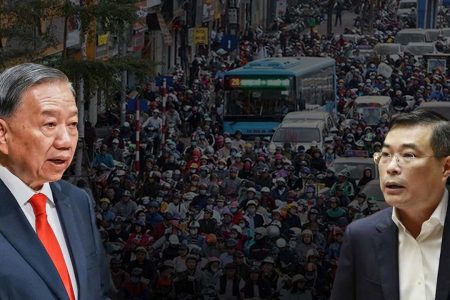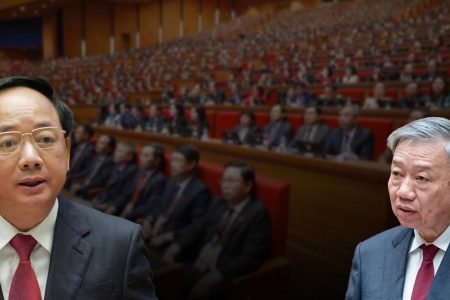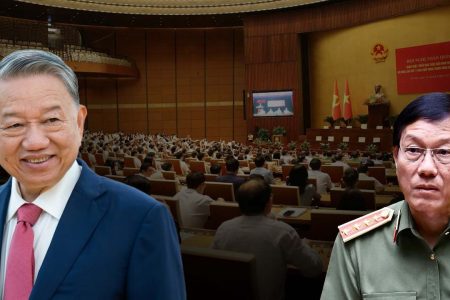
Over one million posts, tens of millions of views, and unabating buzz on the Threads platform among young people in Vietnam over the past few days have created a rare social phenomenon.
According to international observers, this has prompted public opinion to seriously reevaluate core issues in the model of state governance.
The horrific traffic accident that occurred at noon on May 30, 2025, on Nguyen Huy Tu Street in Hai Ba Trung District, Hanoi—where a BMW X3 driven by Mr. Nguyen Si Cuong, a former National Assembly delegate, crashed head-on into the motorcycle ridden by Mr. Do Viet Hung and his daughter—has become the focal point of public outrage.
The victim was Do Ngoc Phuong Thuy, a female student born in 2007, who passed away after a week of suffering in the hospital, just as she was about to take her high school graduation exam.
This traffic accident, coupled with allegations that Mr. Cuong—the driver—showed signs of intoxication, has become the spark for a deep crisis of confidence, as the Police Investigation Agency has remained silent for over 14 months.
This incident is not only a source of pain for the victim’s family but has also become a deep cut to the trust of the Gen Z generation—especially as a series of articles discussing the incident were suddenly removed overnight.
This “conflict” of information has strongly triggered the Streisand effect, making the public’s demand for the truth more intense and harder to contain than ever before.
Most notable is the distinct reaction of Generation Z—a group often perceived as apathetic toward politics—who are now developing a collective mindset regarding justice that is both tenacious and well-organized, something previous generations could not have achieved.
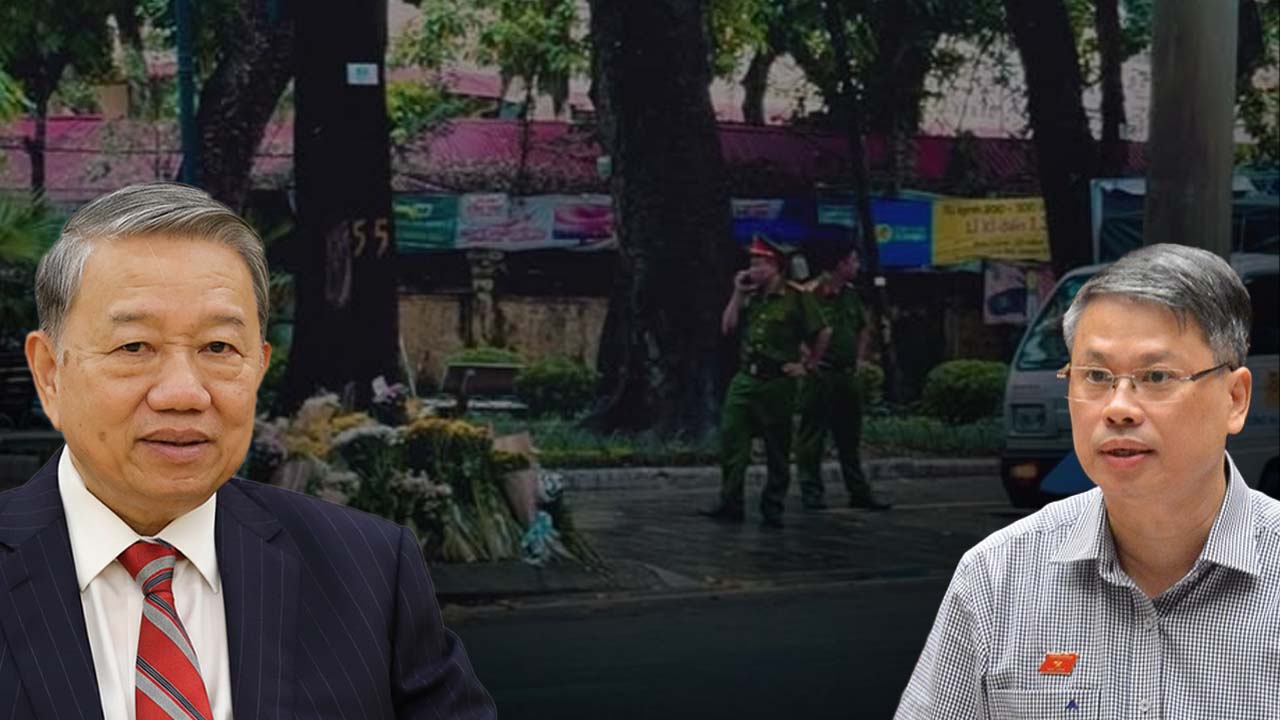
Not only are they engaging in lively discussions on social media, but they’ve also quietly gathered to lay flowers at the base of the tree at kilometer 55—the site of the accident—and are continuously questioning the progress of the authorities’ investigation and the public’s right to know.
Notably, the younger Gen Z generation fears that if this case is not brought to light, the government’s silence will set a precedent for future incidents, and justice will be undermined by those with power or wealth who can flout the law.
Meanwhile, the advanced governance model that General Secretary and President To Lam is striving for is one of transparency and accountability—two critically important and inseparable principles.
However, the case on Nguyen Huy Tu Street paints a completely opposite picture, where an inexplicable and prolonged silence is seen as a stalling tactic to let the matter fade away—yet it serves as a test of the state apparatus’s credibility.
These issues have raised a question: if these seeds of resistance are not addressed with fairness and transparency, could they lead to unpredictable scenarios of instability?
Therefore, the government’s indifference, apathy, or efforts to cover things up only inadvertently deepen the crisis of trust, creating wide chasms between the government and the next generation.
If the government continues to choose a “frightening” silence in the face of legitimate questioning, the Vietnamese government will unwittingly place itself in a confrontational stance against a Generation Z that is both bold and highly unpredictable.
When justice cannot be delayed—it is an imperative duty to combat injustice. Skepticism regarding the integrity of the law, when pushed to its peak, will become a seed of social instability that cannot be ignored.
Don’t forget: the entire Gen Z generation in Vietnam is demanding the rule of law and affirming their faith in fairness for society as a whole.
Trà My – Thoibao.de