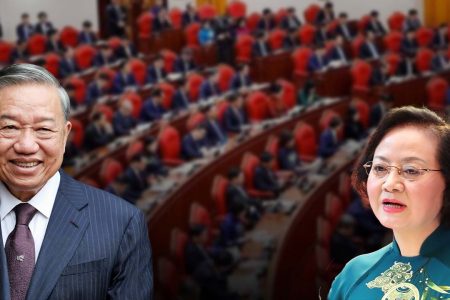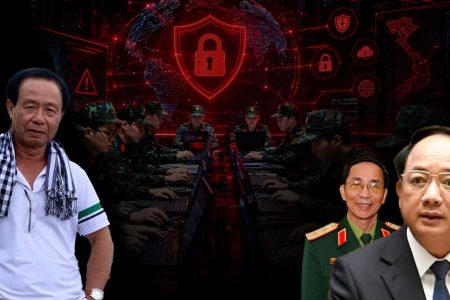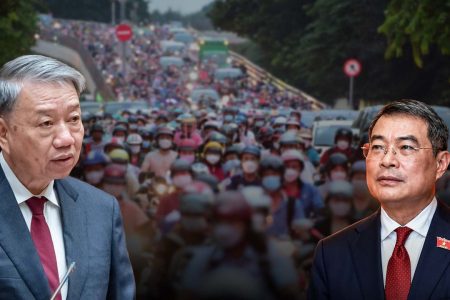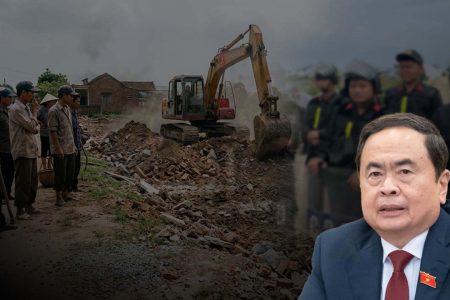
Recently, in early September 2026, Vietnamese Minister of Public Security Luong Tam Quang led a delegation on a visit to the Xinjiang Uyghur Autonomous Region in China.
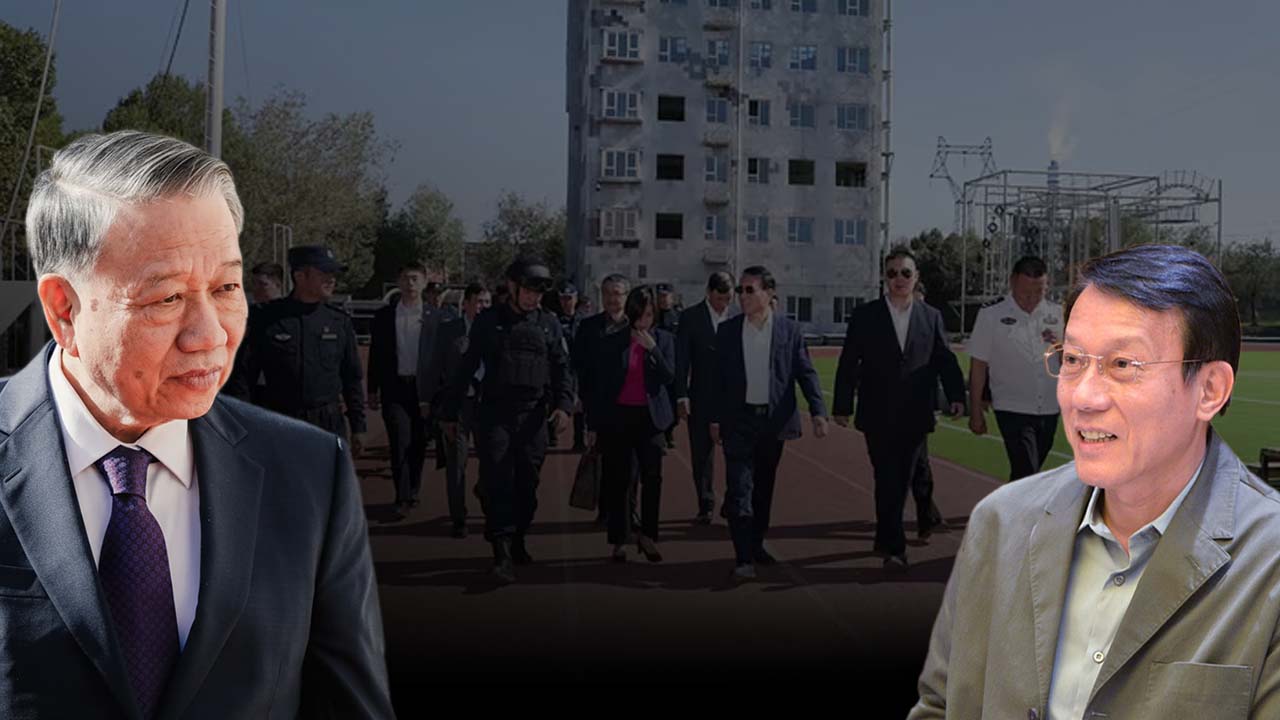
At the same time, the Ministry of Public Security continued to circulate a draft for public comment on the mandatory collection of iris biometric data when applying for ID cards, in addition to fingerprints and facial images.
This move comes shortly after a proposal to collect DNA data from the entire population was officially removed from the ministry’s legislative agenda.
The continuous expansion of biometric control tools targeting citizens reflects a larger reality: the increasingly pervasive presence of “police-state” rule in contemporary social life.
This phenomenon is not limited to the increase in technical measures to control the population. It is also linked to a structural shift within the state system, where security powers are increasingly merging with the political power structure.
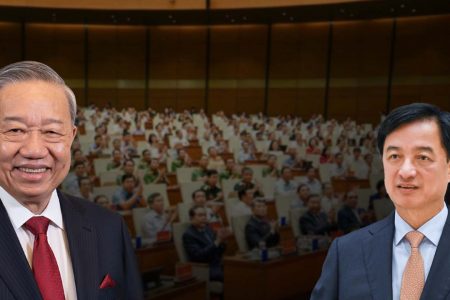
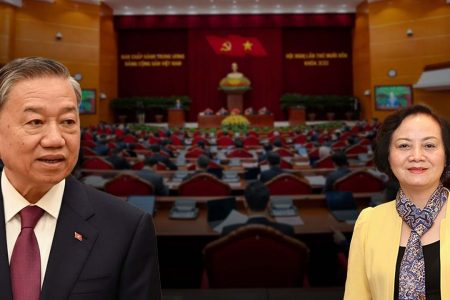
According to international analysts, General Secretary and President To Lam is a leader who rose from the position of head of the Ministry of Public Security and has moved directly into the center of supreme power.
This trend is not limited to the central level; personnel with backgrounds in the public security sector are increasingly appearing in leadership positions within local governments as well as in ministries and agencies across the political system.
Experts note that as the state apparatus includes an increasing number of personnel from the national security sector, the mindset governing social management is facing significant transformation.
Social and economic issues that inherently require dialogue—such as land disputes or allegations of corruption—risk being framed as accusations intended to undermine the government.
The direct consequence of this “police-state” mindset is weighing heavily on the lives of every individual, fostering a pervasive and widespread sense of wariness among the public.
As a result, every citizen lives in constant fear of being labeled as an enemy of the state, leading them to avoid any “sensitive” issues as a means of self-protection.
In a “police-state” society where security forces are omnipresent, even government officials are forced to self-regulate their behavior, prioritizing personal safety over their responsibilities to the state.
The dominance of this mindset of fear has had a profound impact on the governance capabilities of the political system nationwide.
When speaking the truth equates to risk, reports from subordinates to superiors will invariably reflect only what leaders want to hear.
An authoritarian political system lacking honest information and objective criticism is highly prone to the illusion that the policies it enacts are all correct and effective.
Minor frustrations and grievances in daily life, if not gradually addressed, will accumulate over time and carry the latent risk of erupting into revolutions.
The use of coercive measures may immediately suppress spontaneous outbursts, but it cannot resolve the underlying issues.
After more than 80 years of development, the role of the Vietnamese Public Security Forces in maintaining order and safeguarding national security cannot be denied.
However, a government that truly earns the trust of its people always operates based on legitimacy and transparency, rather than on the ability to create a constant threat to society as a whole.
In short, the concentration of power in any political system always requires corresponding mechanisms for oversight and adjustment. If the “police-state” in Vietnam continues to expand its repressive powers as it does today to protect its authority and suppress dissent from society, the system will lose the creativity and capacity for the nation’s overall development.
Trà My – Thoibao.de