
The ruling by the People’s Court of Appeal on September 14, 2026, regarding former Principal Nguyen Thi Binh unfolded like a “deliberate” ploy to evade responsibility—a scenario observers had warned about beforehand.
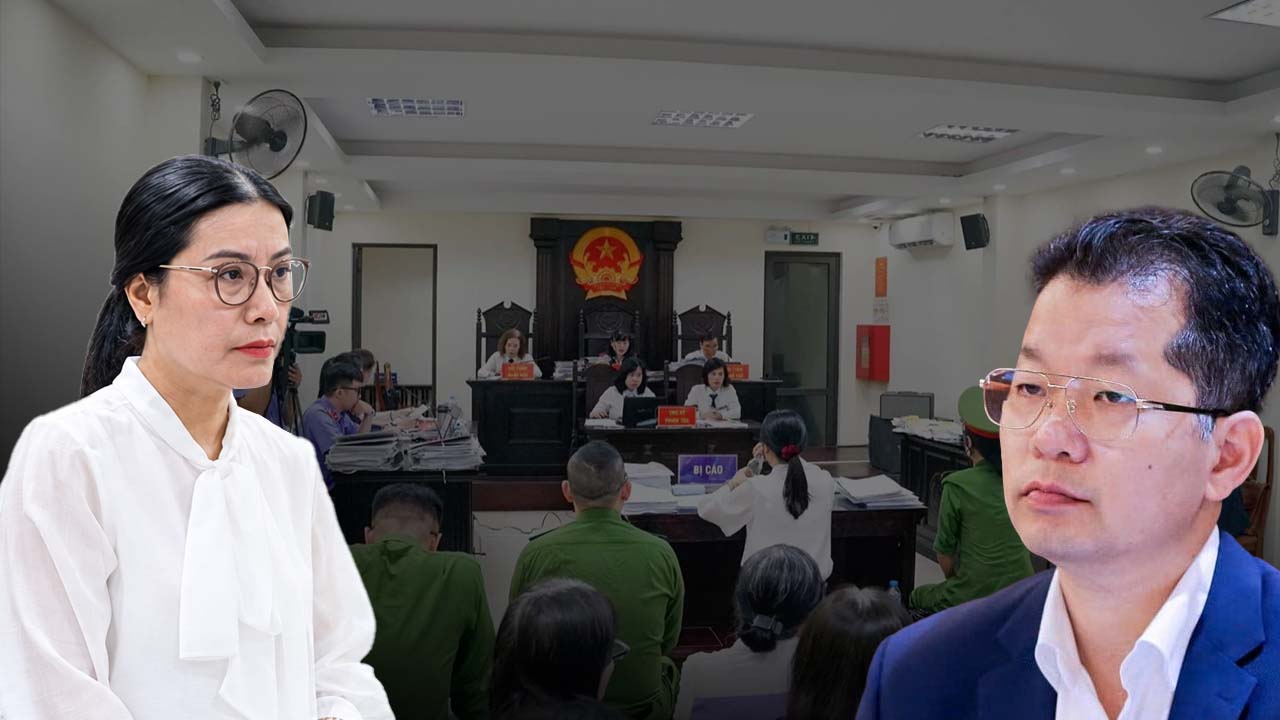
The decision to “quash the verdict and order a retrial” was announced, but at the same time, it opened a new, bitter chapter in a case that has dragged on for a record 13 years.
This is essentially just a ploy by the lower-level judicial system to “shirk” responsibility, using procedural tactics to cover up mistakes and continue to destroy the victim’s reputation in an endless loop of litigation.
The case originated from the collection of fees for tutoring—a civil matter based on a voluntary agreement between the school and parents—but was deliberately criminalized. Over the past 13 years, with the case file returned six times, the reputation and life of former principal Nguyen Thi Binh have been left hanging in limbo.
However, such a deliberate prolongation of the legal proceedings reveals the impasse faced by local prosecutorial authorities. That is, they lack sufficient solid legal evidence to convict, yet they also lack the courage to declare the defendant “not guilty.”
The public is asking why the appellate court did not have the courage to issue a not-guilty verdict right in court? Especially when the legal document serving as the basis for the charges—Decision No. 22—has been revoked by the competent authority for being unlawful?
According to legal experts, if the court were to acquit Ms. Nguyen Thi Binh, the first-instance judicial system would be required to issue a public apology and pay a massive statutory compensation for wrongful conviction.
To avoid this stain on their record, the prosecuting authorities have resorted to the “case dismissal technique” to reinvestigate the case, treating it as a lifeline to “buy time.”
This is because, under Paragraph 3 of Article 174 of the Criminal Procedure Code, when a case is remanded for reinvestigation, the entire investigation period and any extensions thereof are recalculated from the beginning.
For the charge of “Abuse of Position and Authority While Performing Official Duties” in this case, the reinvestigation period will range from 3 to 4 months and may be extended multiple times up to a maximum of 8 months.
Furthermore, if the trial court still attempts to convict her with a lenient sentence in an effort to reach a settlement, Defendant Binh will not accept it and will continue to appeal, at which point the case will return to the appellate court.
According to legal experts, the decision to overturn the verdict is essentially an act of using the law to cover up the mistakes of the judicial system itself.
Notably, the case of former Principal Nguyen Thi Binh has dragged on for 13 years, partly due to the entrenched “closed-door” mentality of local judicial agencies. However, the public’s intense interest has turned into a form of public oversight of the judicial system.
To break this vicious cycle, society can no longer rely on local judicial agencies to “self-reflect and self-correct.”
It is time for the National Assembly’s Judicial Committee to step in directly and demand that the Chief Justice of the Supreme People’s Court and the Prosecutor General of the Supreme People’s Procuracy provide a detailed explanation to the National Assembly regarding why a case has been “shelved” for 13 years.
Similarly, the Central Internal Affairs Commission must direct an investigation to clarify signs of the criminalization of civil matters and the protection of errors within the judicial system at all levels.
At the same time, the Supreme People’s Procuracy must retrieve the entire case file for direct review; if it finds that the elements of a crime are not present, it must have the courage to immediately issue a decision to dismiss the case.
The public hopes to see the Vietnamese judicial system have the courage to face its mistakes head-on and correct them, rather than accepting a judicial system that goes to great lengths to “cover up” for one another, thereby driving the people into a dead end.
Trà My – Thoibao.de