The results of the 2026 U.S. midterm elections on November 3 sent a message that brought about a massive shift in the political landscape. American voters decided to hand control of both chambers of Congress to the opposition as a direct check on the current administration of President Donald Trump.
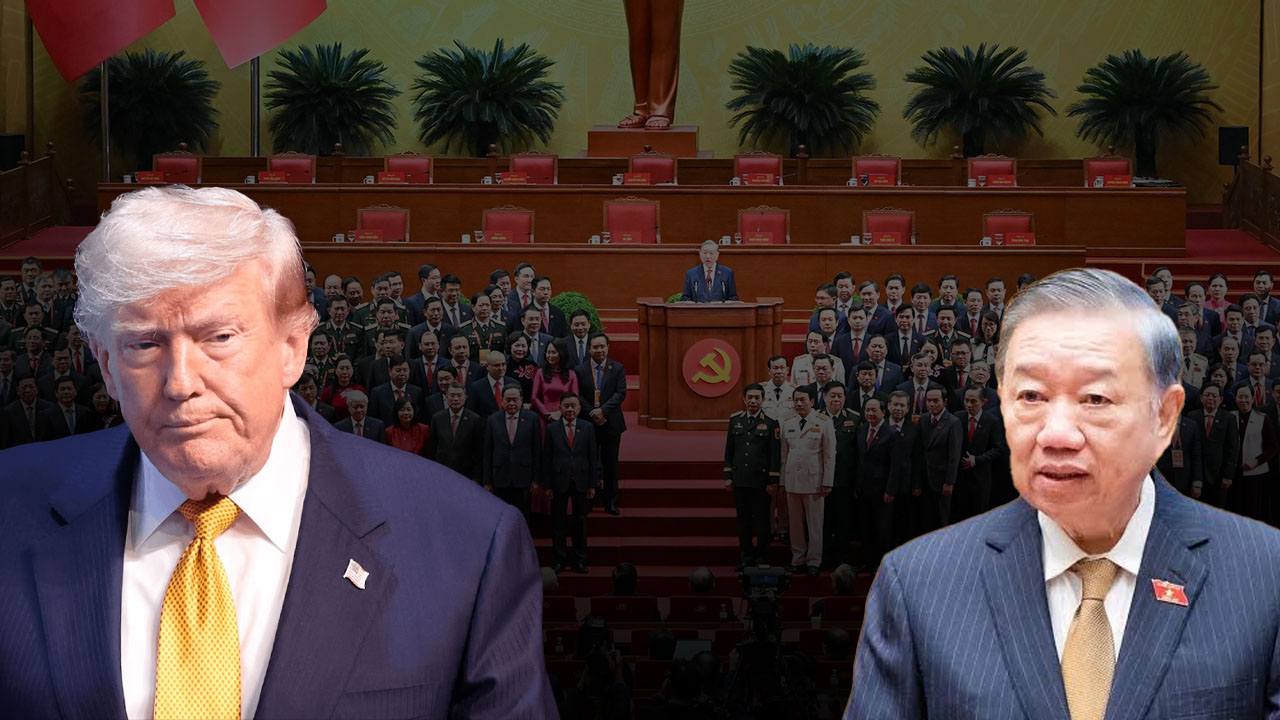
Two years after handing over full control of the executive and legislative branches to the Republican Party, American voters—facing the burdens of high taxes, soaring living costs, inflation, and risks in foreign policy—have now used their ballots to restore balance.
The results of the 2026 midterm elections once again affirm the core nature of the representative democratic system: the ability to quickly correct course based on direct pressure from the public’s votes.
Observing the developments in Washington, analysts cannot help but draw comparisons with Vietnam’s political system—which operates under a one-party system. The fundamental difference between the two systems lies in the mechanisms for checking and balancing power.
In a multiparty system, power is checked from the outside through fair competition among opposing political forces, oversight by an independent media, and regular elections.
When a policy or a leader of the ruling party breaks a promise or acts against the public interest, voters have the direct tool of the ballot to replace that leader or rebalance power.
In contrast, in Vietnam, the mechanism for correcting errors relies entirely on the Communist Party of Vietnam’s (CPV) internal self-inspection and oversight processes and its puppet National Assembly.
Even though, according to the Vietnamese Constitution, all state power originates from the people. Through their votes, the people delegate their power to National Assembly deputies. And the National Assembly is the highest authority that decides the nation’s most important issues.
However, in reality, any personnel changes or policy adjustments are made solely through the Party’s rectification efforts, anti-corruption measures, and internal disciplinary procedures—which are ineffective.
Even regarding the confidence vote mechanism in the National Assembly, its scope of application is limited by customary practices. In fact, key leadership positions within the Party system, such as the General Secretary, are not subject to the National Assembly’s confidence vote—since this position is elected by the Party’s Central Committee.
Additionally, officials newly appointed or preparing to retire in the year of the confidence vote are exempt from the process under the regulations.
The absence of an independent external oversight mechanism and a competitive electoral system means that policy adjustments in Vietnam rely entirely on the principles of democratic centralism, self-criticism, and criticism—which are largely superficial.
While Western democracies may exhibit divisions, superficial instability, or frequent changes in government, they always possess an effective and safe “safety valve” for power—through citizen participation via fundamental freedoms and the ballot.
In contrast, in Vietnam, where the space for dissent is shrinking and confidence votes are conducted behind closed doors, the gap between the people’s aspirations and decisions made at the highest levels grows ever wider.
The 2026 U.S. midterm elections serve as proof that no matter how powerful a government may be, it must ultimately yield to the will of the voters.
For Vietnam, the question “when will it be our turn?” is not merely a comparison of institutional forms, but a warning about the importance of a mechanism for substantive checks on power.
It is here that policy mistakes must be rectified by the authorities through public accountability to the people, rather than merely through closed-door internal rectification processes.
Trà My – Thoibao.de
=======
The 2026 U.S. Midterm Elections and the Question for Vietnam: Where Is the People’s Power?
“… The 2026 U.S. midterm elections demonstrate the role of the vote in checking power. This raises a question for Vietnam regarding the people’s right to self-governance.”
#Vietnam #VietnamPolitics #Thoibao