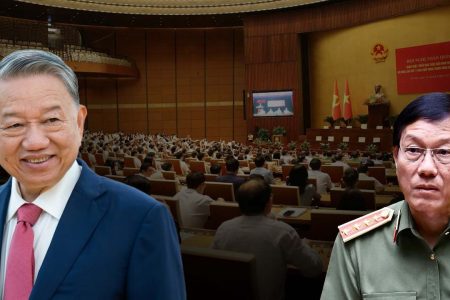
A recent statement on July 29, 2026, by Trần Sỹ Thanh, Head of the Central Inspection Commission, has drawn public attention to one of the most contentious issues in the current political system: the appointment of senior leadership positions within the Communist Party of Vietnam (CPV).
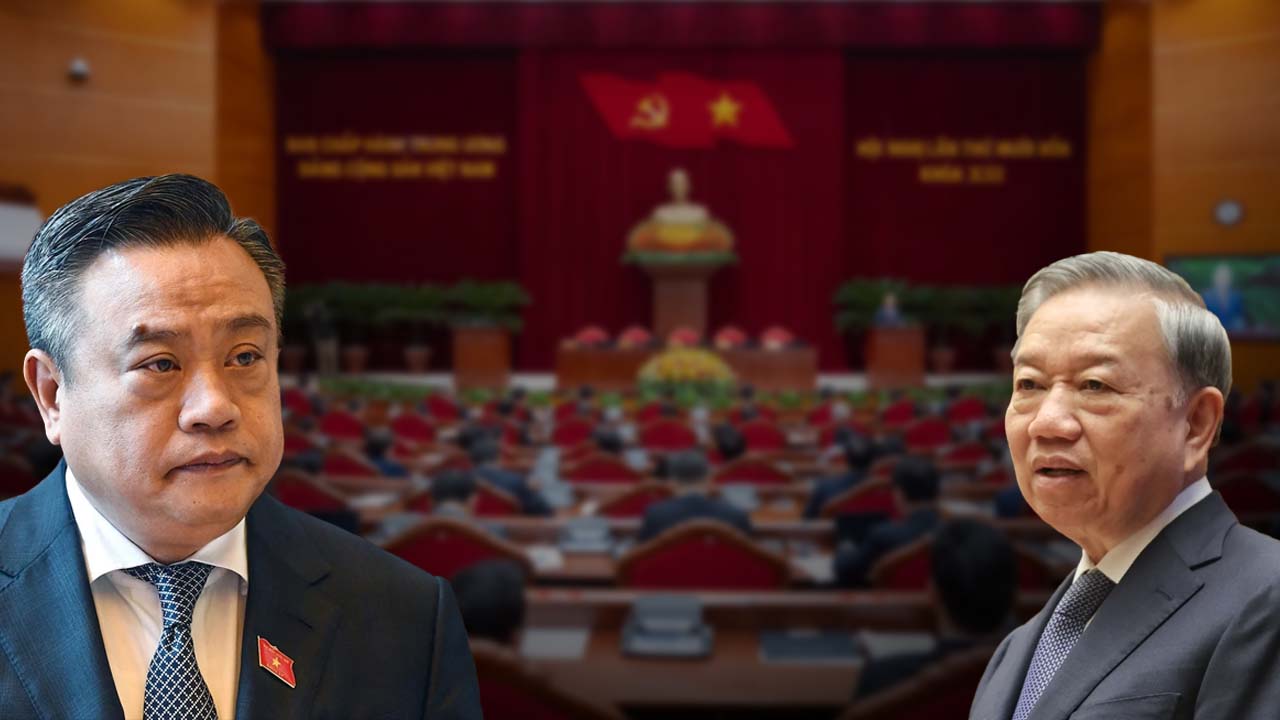
Asserting that this is a necessary regulation to prevent the risk of “exploiting the organizational restructuring process to place cronies and unqualified individuals in key positions,” Mr. Thanh referred to Regulation 207-QĐ/TW issued by the Central Secretariat.
Notably, this document was signed and issued by General Secretary and President To Lam on July 26, 2026, replacing the old Regulation 37 on the “19 Prohibitions for Party Members.”
Against this backdrop, immediately following two consecutive appointments—those of Mr. To Anh Dung, Chairman of Thanh Hoa Province, and Mr. Nguyen Duc Tam, Chairman of Quang Ngai Province—both of whom are fellow natives of Hung Yen Province—public opinion and observers have continuously raised questions: Are these strict provisions intended as a tool to restrain or put pressure on Mr. To Lam?
According to international observers, over the past period, Mr. To Lam, in his capacity as the Party’s leader, has on numerous occasions appointed fellow provincial natives or made hasty appointments followed by rapid transfers to key positions.
This has fueled suspicions of a clique-based, self-serving network aimed at consolidating power. Therefore, analysts argue that the view that Regulation 207-QĐ/TW, issued by the Central Secretariat, is a direct blow aimed at General Secretary To Lam is well-founded.
Regulation 207-QĐ/TW, while retaining the familiar 19 articles, has been significantly expanded to adapt to the complex internal dynamics within the Communist Party of Vietnam, particularly regarding the handling of the book “Chuyện với Thanh” and the disciplinary action against Writers’ Association Chairman Nguyen Quang Thieu.
In addition to the provision “prohibiting the placement of trusted associates” in Article 12, Document 207 also casts a very tight and extensive net of control across many other fronts.
From tightening the management of state secrets, strictly prohibiting the dissemination of misinformation online, to punishing acts of corruption by civil servants.
As the person directly responsible for signing and issuing this new regulation, Mr. To Lam is using Document 207-QĐ/TW to “close the loopholes” in personnel management, thereby fostering consensus and consistency within the Party.
In particular, the expansion of the scope of prohibitions to include acts of distorting history and defaming Party leaders also demonstrates that the Party—and Mr. To Lam—are striving to tighten all gaps in the official ideological framework that have existed from the past to the present.
At the same time, the handling of cases involving artists and the tightening of ideological discipline are seen as evidence of concessions made by Mr. To Lam and the reformist faction in the face of pressure from conservative forces within the Party.
However, this is likely a necessary compromise, as the systemic “red line” intended to protect the regime’s legitimacy is being exploited beyond acceptable limits by a segment of the reformist faction.
Consequently, no leader, no matter how determined to pursue reform, can break away from the core, “immutable” framework of “Communist ideology” of the Communist Party of Vietnam.
The issuance of Regulation 207-QĐ/TW is precisely a means for the system to self-purge and soothe unrest among veteran soldiers and the veteran revolutionary generals.
Therefore, the question of whether the new prohibitions in Regulation 207 will curb Mr. To Lam’s power has, in fact, already been answered.
Namely, Regulation 207-QĐ/TW is not merely a means to tie his hands but a sharp weapon to eradicate “parochial thinking and factional interests”—of which Mr. To Lam is a prime example.
Tra My – Thoibao.de